How Do Insurance Companies Determine Fault After a Car Accident in Pennsylvania?
How Do Insurance Companies Determine Fault After a Car Accident in Pennsylvania?
Insurance companies determine fault after a car accident in Pennsylvania by comparing the available evidence with the driving duties that applied to each person involved. Adjusters review crash reports, photographs, witness accounts, vehicle damage, and other records to decide whose conduct caused the collision. They may assign responsibility to one driver or divide it among several people.
For injured drivers, that decision can affect settlement negotiations and the compensation available. Pennsylvania also has insurance rules that separate certain medical benefits from fault and distinguish between full tort and limited tort rights.
Understanding these differences can help you respond when an insurer questions your account or assigns you part of the blame. Here is what
Pennsylvania drivers should know before accepting an insurance company’s fault determination.
What Insurance Adjusters Look for When Investigating a Crash
An adjuster generally tries to reconstruct what happened before, during, and immediately after the collision. The strongest investigation considers several sources rather than relying exclusively on either driver’s explanation.
Police reports and statements from drivers
A crash report may identify the drivers, describe roadway conditions, document vehicle positions, and record statements or citations. An officer’s observations can provide useful context, especially when the drivers disagree.
However, a report may contain incomplete information or an account from someone who did not actually see the impact. Review it carefully and identify factual errors, such as an incorrect direction of travel or a missing witness.
Adjusters also compare the drivers’ statements. Details about speed, signals, lane changes, and when each driver first saw the other vehicle can influence their conclusions. Guessing about these details can create inconsistencies later.
Photographs, video, and physical damage
Scene photographs can show lane markings, traffic signals, sight obstructions, debris, and vehicle resting positions. Dashcam footage or nearby surveillance video may resolve a dispute about who entered an intersection first.
Vehicle damage helps investigators evaluate whether a driver’s account fits the impact. Damage alone rarely explains every part of a collision, however.
A dent may reveal where contact occurred without establishing which driver had the right of way.
Preserve original photographs and video files. Nearby businesses may overwrite recordings quickly, making early preservation requests valuable.
Witnesses and technical evidence
Independent witnesses may help establish whether a driver ran a light, drifted across a lane, or stopped before impact. Their location and ability to see the collision affect how useful their accounts are.
For a serious or disputed crash, investigators may also consider vehicle event data, roadway measurements, or an accident reconstruction analysis.
Electronic records can require prompt preservation and appropriate legal access.
How Insurers Connect Driving Mistakes to Legal Responsibility
An insurer’s liability analysis generally asks whether a driver failed to use reasonable care and whether that failure caused the accident and resulting losses.
Examples of conduct that may support a negligence claim include following too closely, failing to yield, making an unsafe lane change, or driving too fast for conditions. Identifying a mistake is only part of the analysis: the evidence must also connect it to the collision.
For example, an expired inspection sticker does not, by itself, explain why an intersection crash occurred. Evidence that a driver entered against a red light is much more directly connected to that collision.
Weather and road conditions require context
Rain, snow, darkness, or construction can affect what careful driving requires. An adjuster may examine visibility, following distance, speed, and the time available to react.
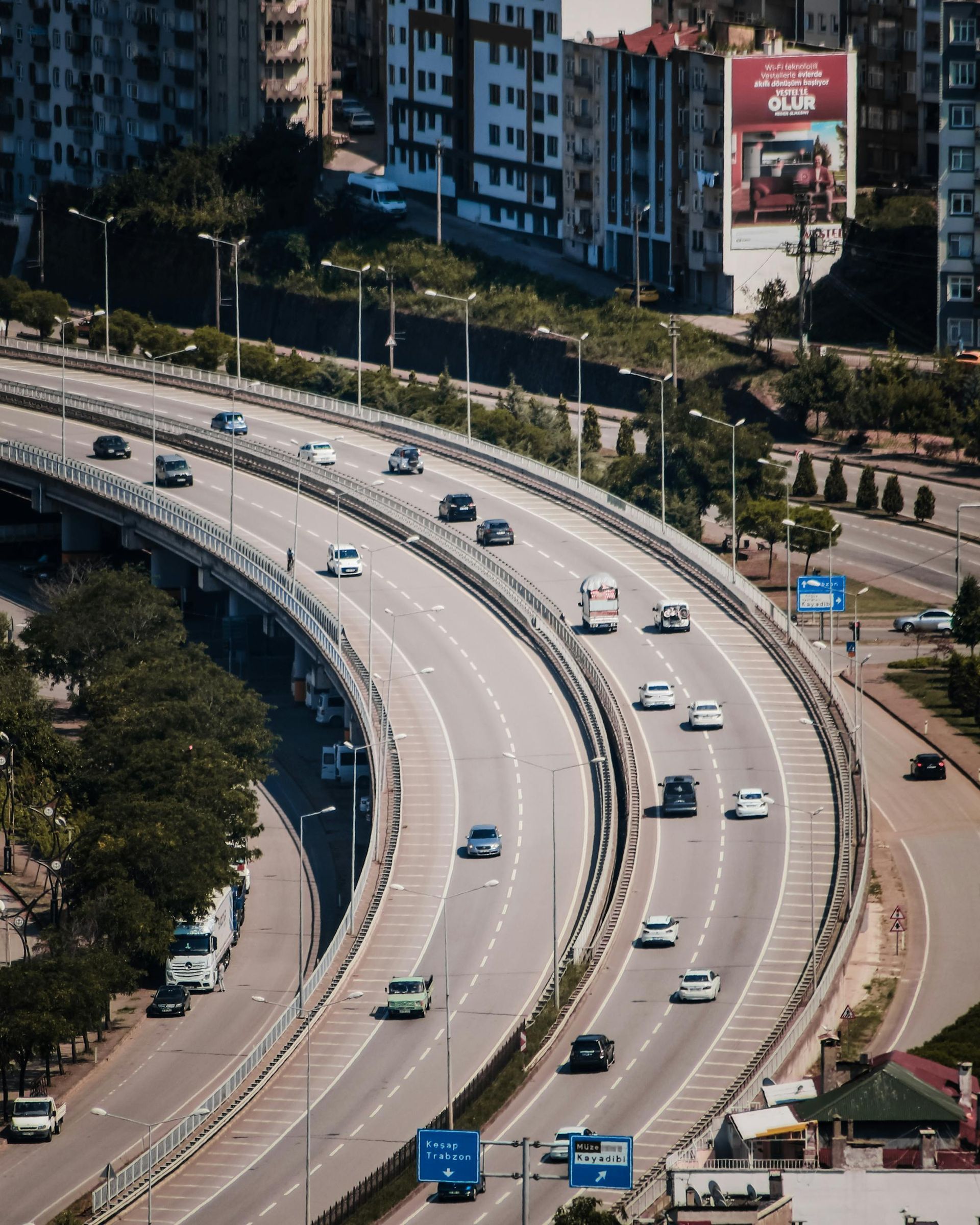
On a Pennsylvania highway, two drivers could contribute to the same crash: one might merge abruptly while another follows too closely to respond safely. The investigation should evaluate both actions and their effect on the impact.
Common crash patterns do not answer every question
A rear-end collision often raises questions about the trailing driver’s following distance and attention. But a sudden unsafe lane change or a chain-reaction impact may change the analysis.
Similarly, a left-turn collision requires a closer look at signal phases, approaching traffic, visibility, and each driver’s opportunity to avoid contact. The label attached to the accident should not replace an investigation.
Why “No-Fault” Coverage Does Not Eliminate Fault Disputes
Pennsylvania’s system can be confusing because certain medical benefits are available without first resolving who caused the accident. That does not mean fault is irrelevant to every claim.
First-party medical benefits generally pay covered accident-related medical expenses regardless of fault, subject to the applicable policy and statutory rules. Pennsylvania requires at least $5,000 in medical benefits coverage. Liability coverage addresses damages for which an insured is legally responsible. pa.gov
This creates separate questions:
- Medical benefits: Which policy must pay covered treatment expenses?
- Liability: Who caused the collision?
- Damages: What losses can the injured person legally recover?
- Coverage: What insurance applies, and what limits or exclusions affect payment?
A medical payment does not establish that the insurer accepts its policyholder’s responsibility for the crash. Likewise, an ongoing liability dispute does not necessarily prevent an eligible person from receiving first-party medical benefits.
Full tort and limited tort affect available damages
Under 75 Pa.C.S. § 1705, full tort generally preserves the right to pursue economic and noneconomic damages under applicable law. Limited tort generally restricts recovery for pain and suffering and other noneconomic losses unless a serious injury or statutory exception applies. Neither option determines who caused the accident. VEHICLES
An insurer may therefore accept that its driver caused the collision while disputing whether your tort election permits a particular category of compensation.
What to Do if an Insurance Company Says You Were at Fault
A fault determination should explain how the evidence supports the insurer’s conclusion. If the explanation conflicts with what happened, respond with specific documentation.
Request a clear explanation
Ask the adjuster to identify:
- The conduct they believe caused or contributed to the accident.
- The evidence supporting that conclusion.
- Any percentage of responsibility assigned to you.
- Whether the dispute concerns fault, insurance coverage, or the value of your losses.
These are different issues and may require different responses.
Organize a factual response
Create a brief timeline supported by photographs, witness information, video, and relevant records. Explain the disagreement directly.
For example: “The denial says I moved into the other driver’s lane. The attached dashcam recording shows my vehicle remaining in the same lane before impact.”
If a crash report contains an error, contact the reporting agency about its correction or supplemental-information process. A disagreement with an officer’s conclusion may require supporting evidence rather than a simple request to change it.
Review statements and releases carefully
Report the accident promptly and comply with applicable duties under your own policy. Give accurate information and distinguish what you remember from what you do not know.
Before giving a recorded statement to another driver’s insurer or signing a settlement release, consider legal advice. A broad release may resolve claims beyond the immediate vehicle repair dispute. Read the actual language rather than assuming a payment covers only one issue.
How Long Do You Have to Challenge Fault in Pennsylvania?
An internal insurance review does not replace the deadline for filing a lawsuit.
Pennsylvania generally provides two years to bring a personal injury lawsuit arising from a car accident under 42 Pa.C.S. § 5524. For a typical accident injury claim, that period usually runs from the collision date. Exceptions can affect the calculation, and some claims have additional notice requirements. JUDICIARY AND JUDICIAL PROCEDURE
Continuing to exchange documents or negotiate with an adjuster generally does not, by itself, extend the filing deadline. Policy notice obligations can also require action sooner.
Early investigation has another benefit: evidence becomes harder to obtain over time. Vehicles are repaired, recordings disappear, and witnesses become more difficult to locate. Preserving proof promptly can matter even when the lawsuit deadline seems far away.
Frequently Asked Questions About Pennsylvania Car Accident Fault
Can insurance companies disagree about who caused the accident?
Yes. Each insurer may evaluate the evidence differently, especially when the drivers give conflicting accounts or no independent witness saw the impact. One company’s acceptance or denial does not automatically bind another. Resolving the disagreement may require additional evidence, negotiations, or an appropriate legal proceeding.
What if the other driver changes their story?
Preserve any earlier account you lawfully possess, including messages, photographs, or witness information. Tell the adjuster exactly how the accounts differ and provide supporting documentation. A changed story can affect credibility, but it does not automatically establish fault. Physical evidence and independent observations can help test both versions.
Does the driver with more vehicle damage have the stronger claim?
Not necessarily. Vehicle size, impact angle, crash structures, and repair costs can produce very different damage levels in the same collision. The amount of damage may help investigators understand the forces involved, but it does not establish who drove negligently. Injury severity and legal responsibility also require separate analysis.
What if several vehicles were involved?
Investigators must examine the sequence of impacts and each driver’s conduct. A driver pushed into another vehicle may have a different role from
someone who independently caused an additional collision. Photographs, witness accounts, and reconstruction evidence can help distinguish the impacts. Multiple vehicles also create more complicated coverage and responsibility questions.
Talk to Tadross Law About a Pennsylvania Car Accident Claim
A fair fault assessment should account for the complete evidence, Pennsylvania’s negligence rules, and the insurance provisions that apply to your claim. An early denial or shared-fault allegation deserves careful review when it conflicts with the record.
If you were injured in a Pennsylvania car accident and have questions about an insurer’s decision, contact Tadross Law to discuss your circumstances and potential legal options.